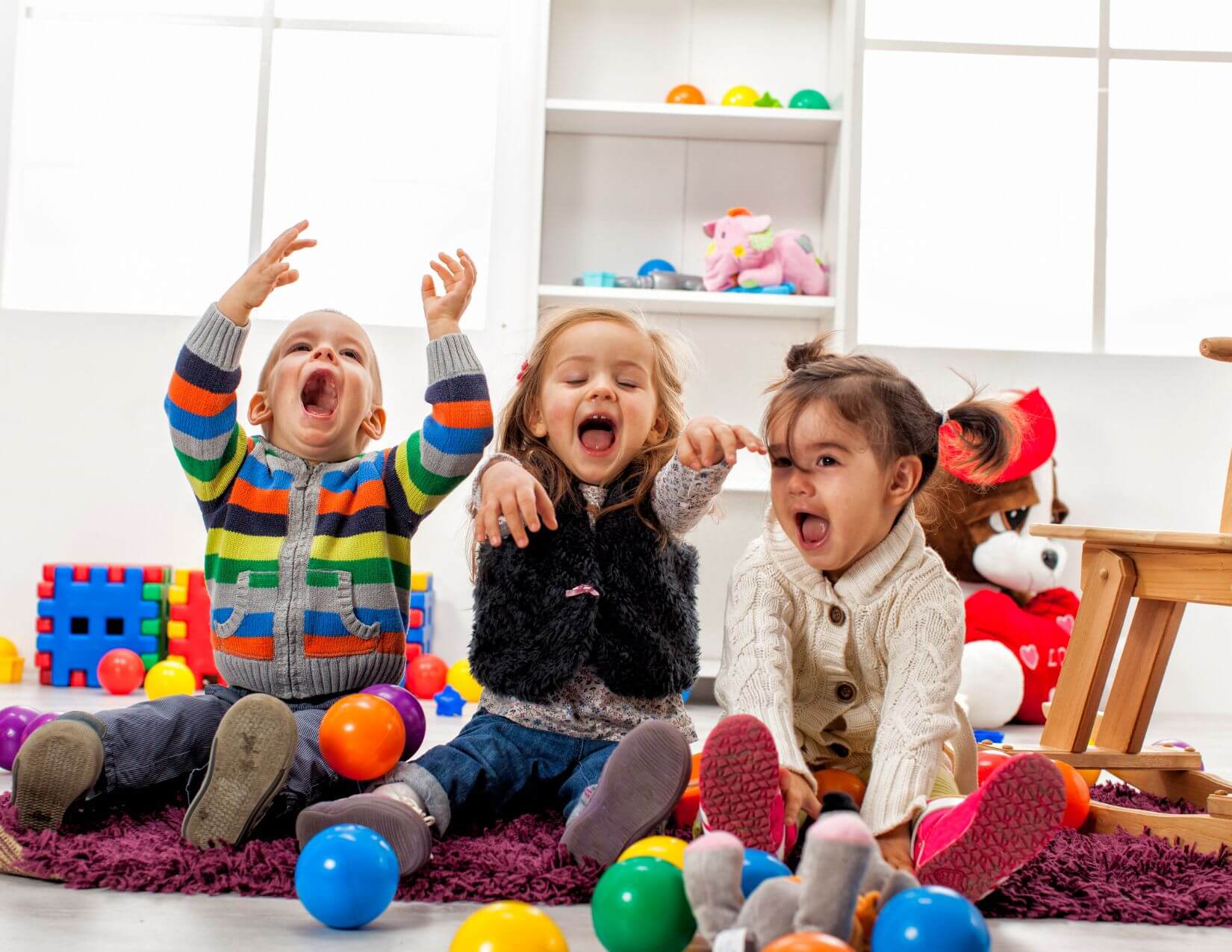
What is Shared Enjoyment in Childhood?
Shared enjoyment in childhood is about the joy of interacting with another person—whether through play, talking, or shared activities. It’s a foundational social skill where kids engage with each other, demonstrating connection through eye contact, laughter, smiles, and facial expressions.
Healthy shared enjoyment might look like your child proudly showing you something, looking at you while anticipating your reaction, or making attempts to connect with you and others.
Signs of Difficulty with Shared Enjoyment
If your child is struggling with shared enjoyment, you may observe these challenges.
- Awkward silence: A blank stare when you share something personal or ask a question.
- In their own world: Your child prefers to play happily and giggle alone, showing little interest in joining others.
- Unable to engage others: Your child talks only about their preferred topics (like trains or Minecraft) with no attempt to engage others’ interests.
- Preference for playing alone: They are content enjoying an activity (a book, a game, a snack) and do not particularly care if others join them.
- Parallel play: Your child plays beside other children but not with them in a reciprocal, engaging manner. (Note: Parallel play is typical for toddlers but usually transitions to cooperative play by preschool.)
- Looking away: A lack of interest when you try to direct their attention to an object of interest by saying, “Look at that!”
- Intense focus on specific topics: Interactions revolve entirely around one or two highly preferred topics, excluding others.
Across different ages, this difficulty can look like a younger child being happy with toys but turning away from people; a preschooler enjoying solo play and engaging in mostly one-sided interactions when they are with peers; or a teenager ignoring input from others to only converse about their area of interest, which can lead to feelings of loneliness and low self-esteem.
Underlying Factors and Related Social Skills
Difficulties with shared enjoyment are often related to a combination of factors.
- Developmental delays: The pace of social milestones may differ from other children.
- Attention problems: Struggling to pay attention makes it difficult to focus on others’ interests.
- Social skills gaps: Challenges with specific social skills make sharing enjoyment hard.
- Neurological differences: When children have an autism neurotype (or unique style of wiring), differences in brain connections can impact social engagement. Issues with shared enjoyment can be an early indicator of this neurotype.
Shared enjoyment is intertwined with other critical social skills.
- Joint attention: Sharing attention by pointing or following someone else’s gaze.
- Cooperative play: The ability to play together, take turns, and allow others to choose activities.
- Reciprocal conversation: Engaging in a conversation that involves a balance of listening, sharing, and asking questions.
- Perspective-taking: Understanding that someone else’s thoughts and ideas may differ from your own.
Strategies for Encouraging Shared Enjoyment
Parents and caregivers can help their child develop these skills by modeling and initiating positive interactions.
- DO join your child in play: Engage with warmth, physical touch (if welcomed), and follow your child’s lead rather than being overly directive. For some children with an autism neurotype, physical play like hugs and tickles can be an easier starting point.
- DO initiate shared enjoyment: Begin with an activity your child already loves (gardening, baking, Legos) and model enjoyment by laughing, hugging, and commenting on how much fun you are having together.
- DON’T make it a Q&A session: Avoid the trap of constantly asking questions. Instead, make comments and wait for your child to respond. For example, “Wow, that pan is really hot!” allows a space for organic conversation.
- DO gradually expand interaction: Slowly introduce new activities outside of your child’s core interests to help them realize that exploring new things with others can be fun.
- DO expand from family to friends: Help transfer these skills to peer interactions by planning playdates around shared interests. You can use Social Stories—writing out the interaction beforehand with simple steps—to provide a structure for cooperative play (e.g., “I will play with the computer for ten minutes, then I will stop and give Brian a turn”).
- DO have a mix of interactions and downtime: Balance family togetherness with time alone for your child to relax and pursue individual interests.
When to Seek Help
Shared enjoyment is a complex skill, and support may be necessary if you have any concerns about your child’s ability to connect with peers. Early intervention often leads to better outcomes due to brain plasticity in young children.
- Evaluation: Seek an evaluation from a trained testing psychologist to assess social skills, cognition, language, and other areas, resulting in a profile of strengths, weaknesses, and prioritized treatment recommendations.
- Therapy: Consider therapy models such as Pivotal Response Treatment (PRT) used by a Board-Certified Behavior Analyst (BCBA), which can help a child make significant social progress in areas like social communication and responsiveness. Other supportive professionals include a Speech Pathologist (for pragmatic/social language) and a School Psychologist (for school-based support and social groups).
Resources
- Association for Science in Autism Treatment. www.asatonline.org
- Baker, Jed. (2006). Social skills picture book for high school and beyond.
- Baker, Jed. (Retrieved 2017). Social skills books and resources for ASD.
- Barton, Erin. Educating Young Children with Autism Spectrum Disorders.
- Berns, Roberta M. (2010). Child, family, school, community: Socialization and support.
- Gray, Carol & Attwood, Tony (2010). The New Social Story Book, Revised and Expanded 10th Anniversary Edition: Over 150 Social Stories that Teach Everyday Social Skills to Children with Autism or Asperger’s Syndrome, and their Peers.
- Koegel Autism Center, University of California at Santa Barbara. education.ucsb.edu/autism
- Kroncke, Willard, & Huckabee (2016). Assessment of autism spectrum disorder: Critical issues in clinical, forensic, and school settings. Springer, San Francisco.
- Ozonoff, Sally, Dawson, Geraldine & McPartland, James C. (2014). A parent’s guide to high-functioning autism spectrum disorder: How to meet the challenges and help your child thrive.
- Trawick-Smith, Jeffrey (2013). Early childhood development: A multicultural perspective.
- UCSB PEERS Clinic. https://www.semel.ucla.edu/peers